Links tagged “python”
233 links, newest first.
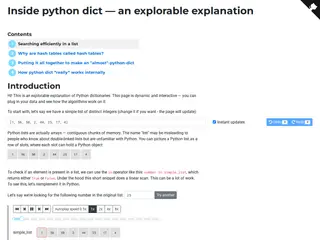
just-taking-a-ride.com
An animated explanation of how CPython's dict works, built up from linear search through hash tables and linear probing, running on data you type in.
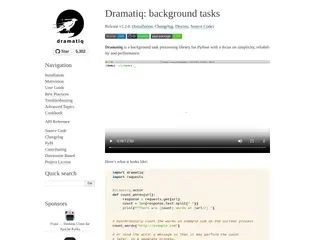
dramatiq.io
Documentation for Dramatiq, a Python background task library where decorated functions become actors dispatched to workers over RabbitMQ or Redis.
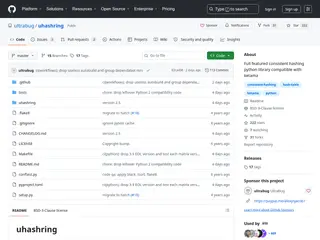
github.com
A pure-Python consistent hashing ring, ketama-compatible, with per-node weights and pluggable hash functions.
nteract.io
Desktop application for opening and running Jupyter notebooks directly, without a browser or a notebook server.
agate.readthedocs.io
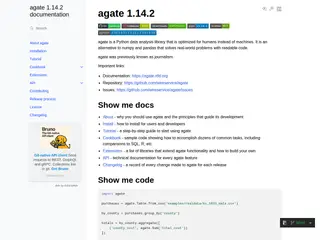
Python data analysis library optimised for readability rather than speed, offered as an alternative to numpy and pandas for everyday data work.
vorpus.org
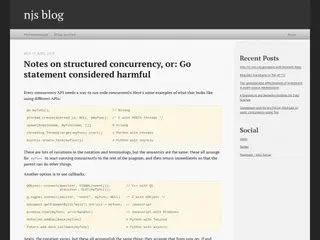
Argues that go statements wreck control flow the way goto did, and proposes the nursery — a scope that cannot exit until its child tasks have finished.
bpython-interpreter.org
Interactive Python interpreter with inline syntax highlighting, autocompletion, parameter hints and a rewind command.
geoalchemy-2.readthedocs.io
Documentation for GeoAlchemy 2, SQLAlchemy extensions for working with spatial databases, with primary support for PostGIS.
harishnarayanan.org
Guide to containerising a Django application with Docker and running it on Kubernetes for scale and resilience.
peterbe.com
Benchmarks several ways to remove duplicates from a Python list, and finds list(dict.fromkeys(seq)) fastest when insertion order must be preserved.
importlib-resources.readthedocs.io
Documentation for importlib_resources, the Python library for reading data files bundled inside packages, meant to replace pkg_resources.
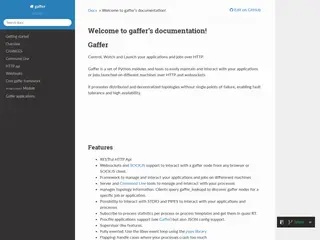
gaffer.readthedocs.io
Documentation for Gaffer, a Python tool that launches, supervises and controls applications and jobs across machines through an HTTP API.
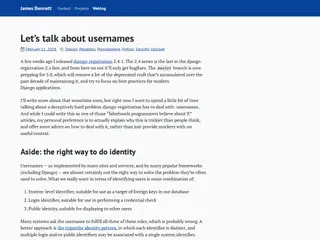
b-list.org
Why usernames are harder than a unique column — case folding, Unicode normalisation, homograph attacks, reserved names, and the tripartite identity pattern.
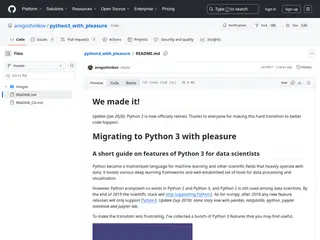
github.com
Short guide to the Python 3 features that make the migration worthwhile for data scientists — matrix multiplication operator, pathlib, type hints, f-strings and unicode.